July 2026
The Diademed Sandpiper-Plover: A Guide to Marcapomacocha
A field guide to the Diademed Sandpiper-Plover at Marcapomacocha, the high-Andean cushion bogs above Lima — the most reliable place on Earth to see this unique wader, plus how and when to go.
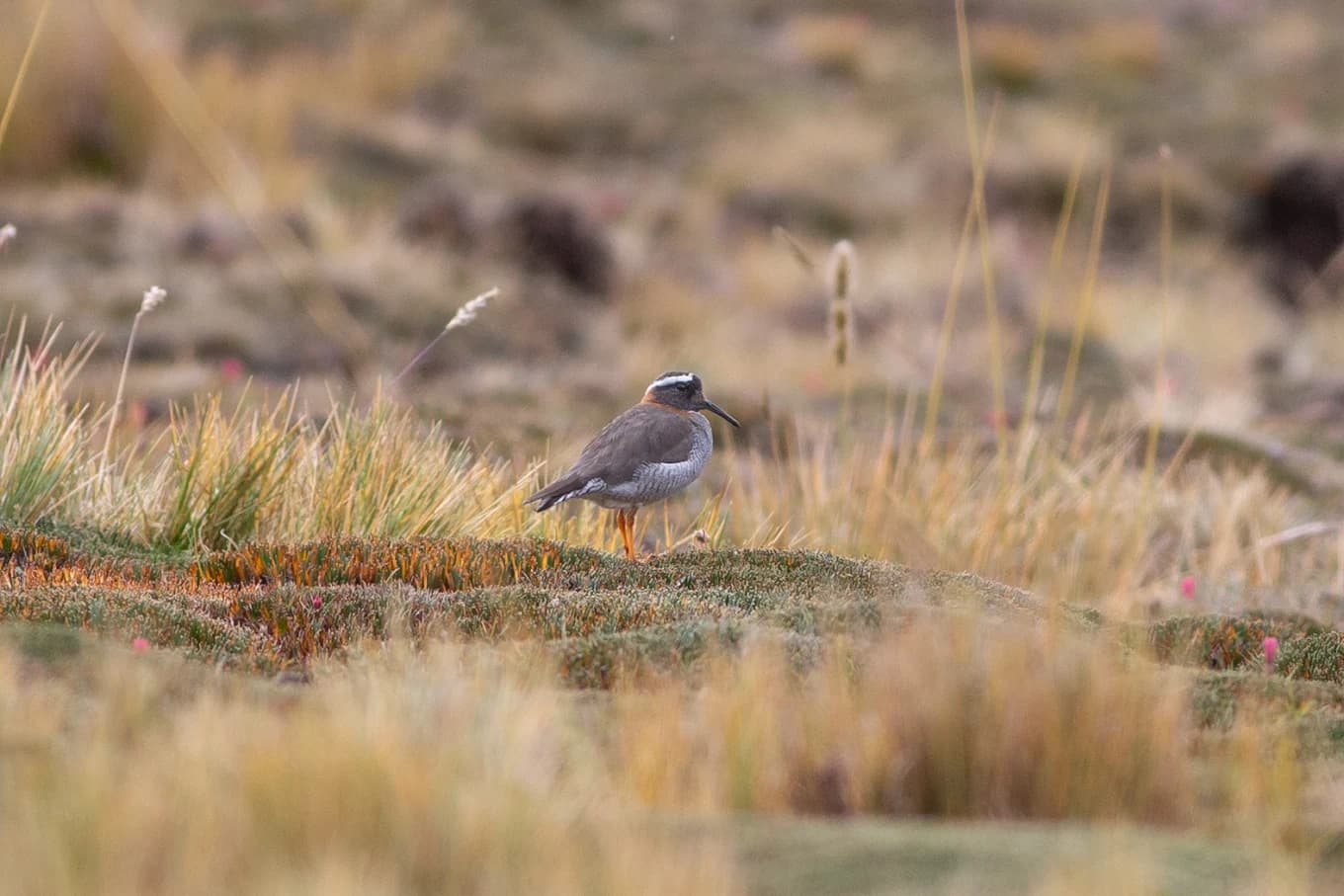
If there is a single bird that pulls listers up the switchbacks above Lima, it is the Diademed Sandpiper-Plover. Small, improbably tame and clad in a grey, chestnut and finely barred plumage found on no other wader, it lives only on the high Andean cushion bogs — and the bofedales around Marcapomacocha, a few hours from the Peruvian capital, are the most reliable place on Earth to find one.
A wader like no other
The Diademed Sandpiper-Plover (Phegornis mitchellii) is the only member of its genus — an evolutionary one-off with the round-headed look of a plover, the probing bill of a sandpiper, and a chestnut collar and white 'diadem' across the crown that give it its name. It picks its way through the soggy cushion plants of the puna above roughly 4,000 metres, and because it so rarely encounters people, a patient birder can often approach within a few metres for the photograph of the trip.
Where to see it: Marcapomacocha and the Ticlio pass
From Lima, the Carretera Central climbs past the Ticlio pass — one of the highest road crossings in the world — into a landscape of glacial lakes and cushion bogs around Marcapomacocha. This is prime Diademed Sandpiper-Plover country. The trick is knowing which bofedales hold territories and working them slowly on foot; the birds are easy to walk past and easy to see once you have your eye in.
The supporting cast
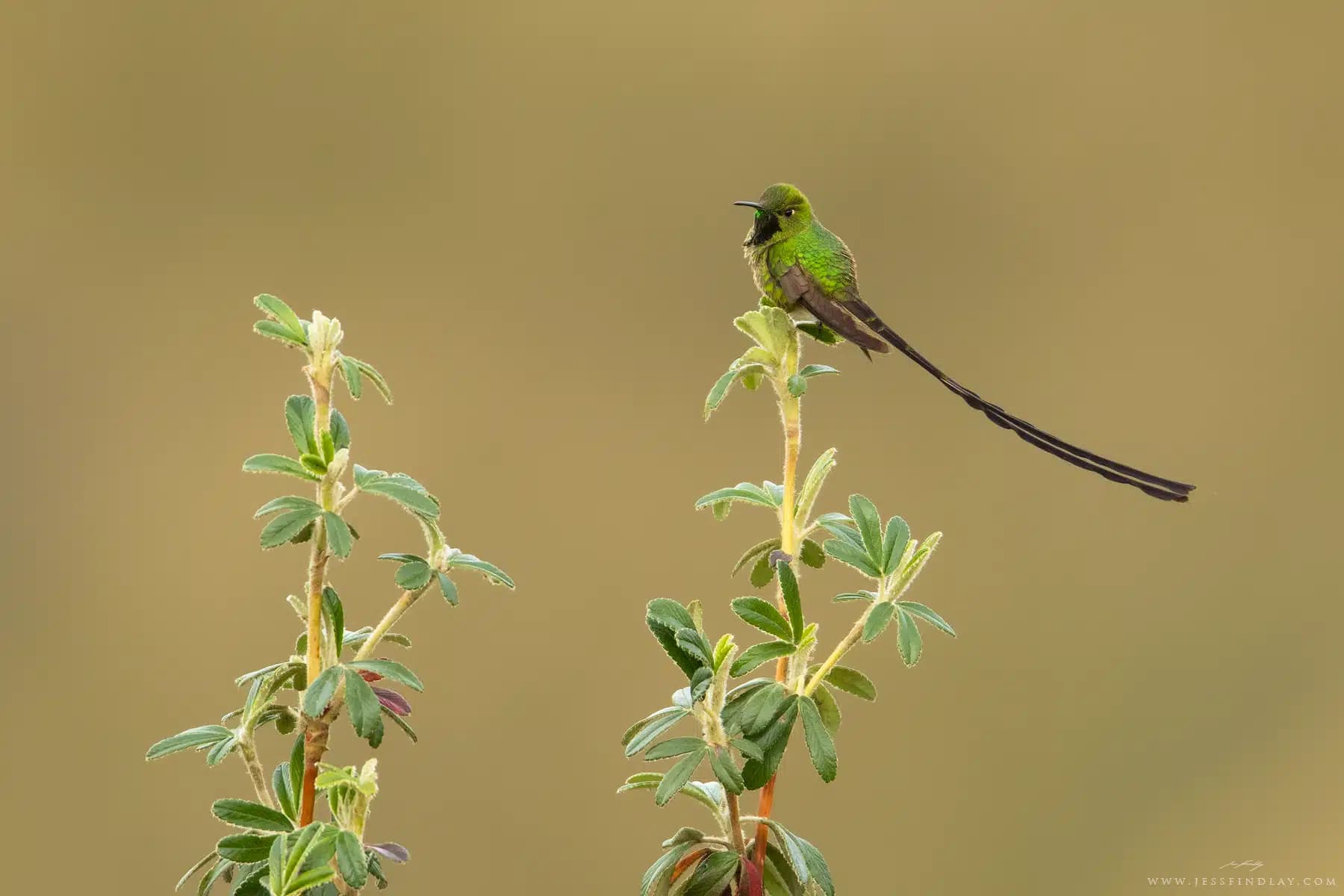
Few day trips from Lima are as endemic-rich. Alongside the sandpiper-plover you can expect the critically endangered White-bellied Cinclodes — one of Peru's most beautiful and threatened birds — plus Olivaceous Thornbill feeding low over the cushion plants, Black-breasted Hillstar, Dark-winged Miner, Junín Canastero, Grey-breasted Seedsnipe and rafts of Giant Coot. Andean Condors patrol the ridgelines most days.
When to go
The puna can be birded year-round, though the drier months (roughly May to October) generally mean more settled weather at altitude. Whatever the season, this is a high-elevation day: dress in warm layers, drink plenty of water, and take the ascent gently, especially if you have only just arrived in Peru. Because the sites sit above 4,500 metres, we pace the day to keep it comfortable.
Seeing it with Wild Andes Tours
We run the Marcapomacocha day as a focused, pre-dawn departure from Lima built entirely around finding the Diademed Sandpiper-Plover and its high-puna neighbours. It also forms the second day of our 2-Day Santa Eulalia Birding Tour, which pairs the canyon's endemics with the bogs above Marcapomacocha. Tell us your dates and we'll get you onto this remarkable little wader.
The Diademed Sandpiper-Plover is the flagship of our Marcapomacocha birding tour, a high-Andean day trip from Lima.
Want to see these birds in the field?
We run small-group birding and photography tours around Lima and across Peru, guided by the people who wrote this article.