July 2026
The Birds of Machu Picchu: A Birdwatcher's Guide
What birds can you see at Machu Picchu? A field guide to the citadel and its cloud forest: the endemic Inca Wren, Andean Cock-of-the-rock, Torrent Ducks on the Urubamba, where to find them and when to go.
Every year more than a million people climb to the citadel of Machu Picchu and look at the stones. Birders look past them — because the Machupicchu Historic Sanctuary protects one of the most accessible stretches of cloud forest in the Andes, with more than 400 bird species recorded between the raging Urubamba River and the high grasslands above the ruins. You can stand on a 15th-century terrace at dawn and watch mixed tanager flocks roll through the canopy below you. Few World Heritage Sites double as world-class birding destinations. This one does.
The star: an endemic wren that lives in the ruins
Machu Picchu has its own special bird. The Inca Wren was only described by science in 1985 — remarkably late for a bird living beside one of the most visited places on Earth — and it exists nowhere outside the bamboo-choked cloud forest of this corner of Cusco. Pairs and family groups work the Chusquea bamboo along the upper terraces and the trail toward the Sun Gate, giving loud, rollicking duets long before you see them. Patience at a singing thicket is usually rewarded: a bold, chestnut-and-grey wren with a finely streaked chest, hopping into the open a few metres away, with the citadel spread out behind it. It is one of the easiest place-name endemics in the world to see, and most visitors walk straight past it.
The showstopper: Andean Cock-of-the-rock
Peru's national bird reaches peak accessibility at Machu Picchu. In the town below the ruins — Aguas Calientes — and especially along the gentle Mandor valley trail that follows the railway, the impossible neon-orange males feed in fruiting trees right beside the path. Early morning and late afternoon are best, and in season an active lek performs its shrieking, bowing displays within earshot of the train line. If you have ever wanted the classic Peru photograph without a ten-hour drive into the Manu lowlands, this is where you take it.
The river birds of the Urubamba
The Urubamba River thunders in a granite gorge around the base of the mountain, and its whitewater holds a supporting cast most rivers can only envy. Torrent Ducks — the world's great whitewater specialist — loaf on midstream boulders with their chicks, visible from the train windows and the Aguas Calientes bridges. White-capped Dippers flash between rocks, Torrent Tyrannulets flit at the waterline, and with luck a Fasciated Tiger-Heron stands motionless in the shallows. Twenty minutes on any footbridge in town usually produces the duck and the dipper both.
Hummingbirds, quetzals and cloud-forest flocks
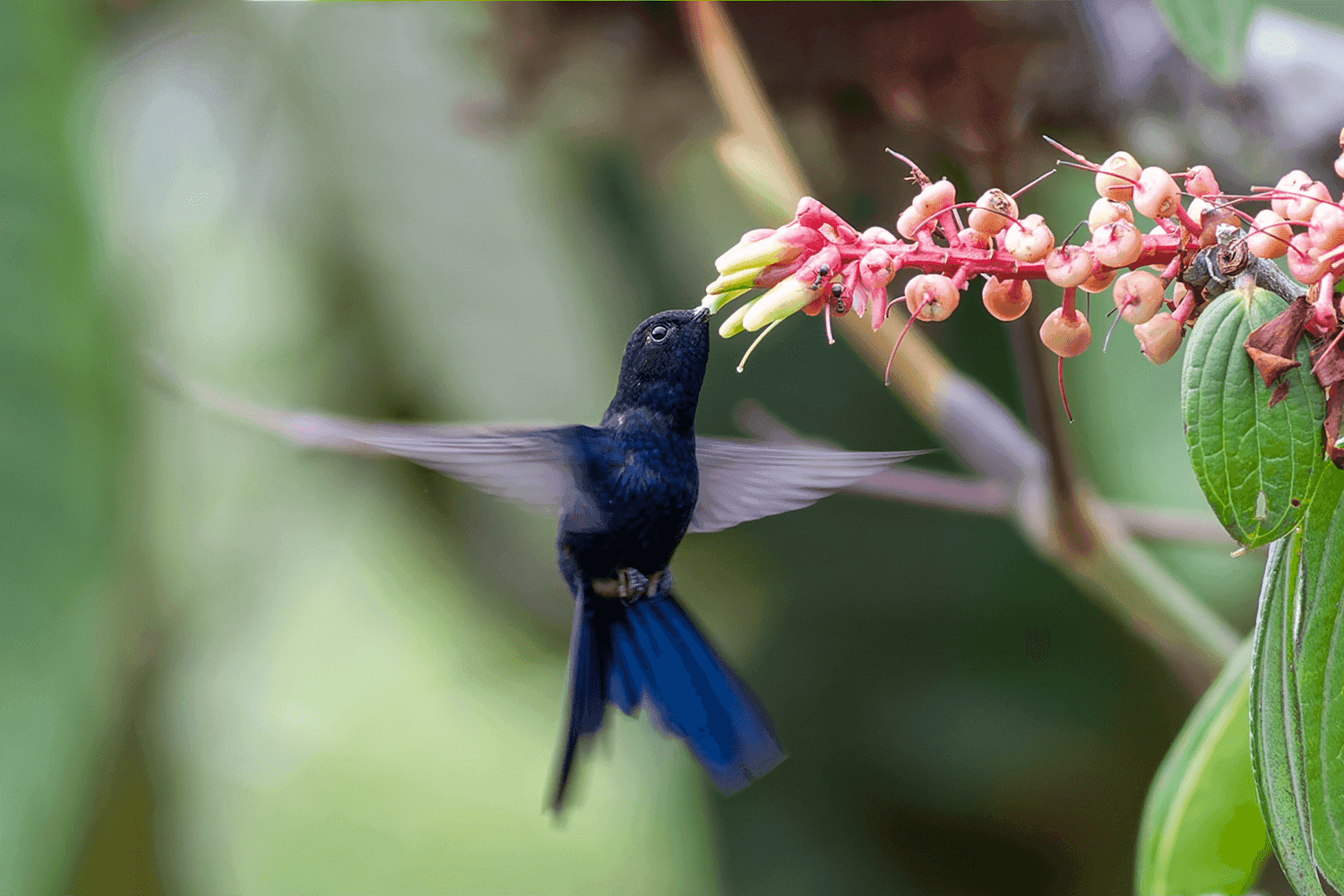
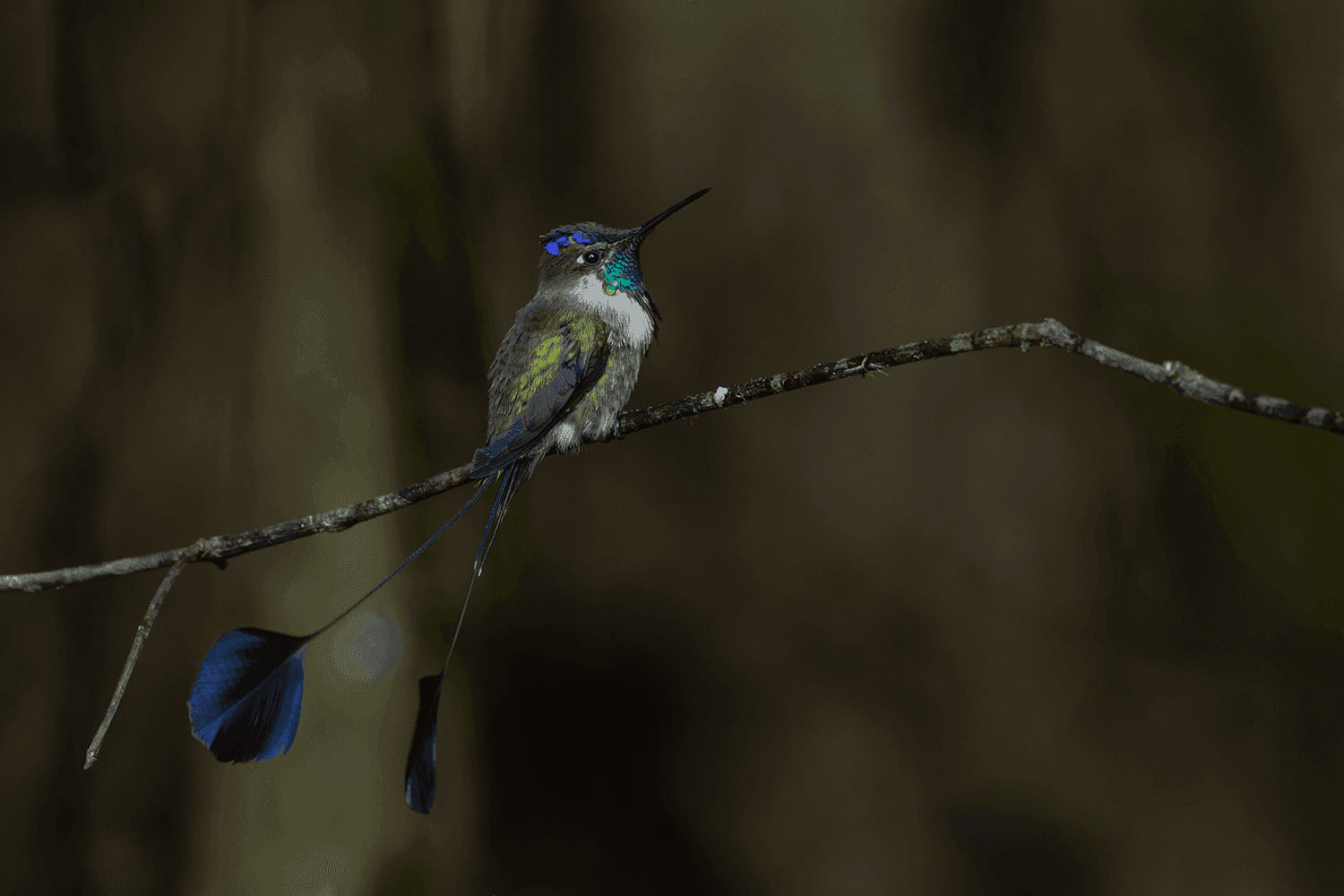
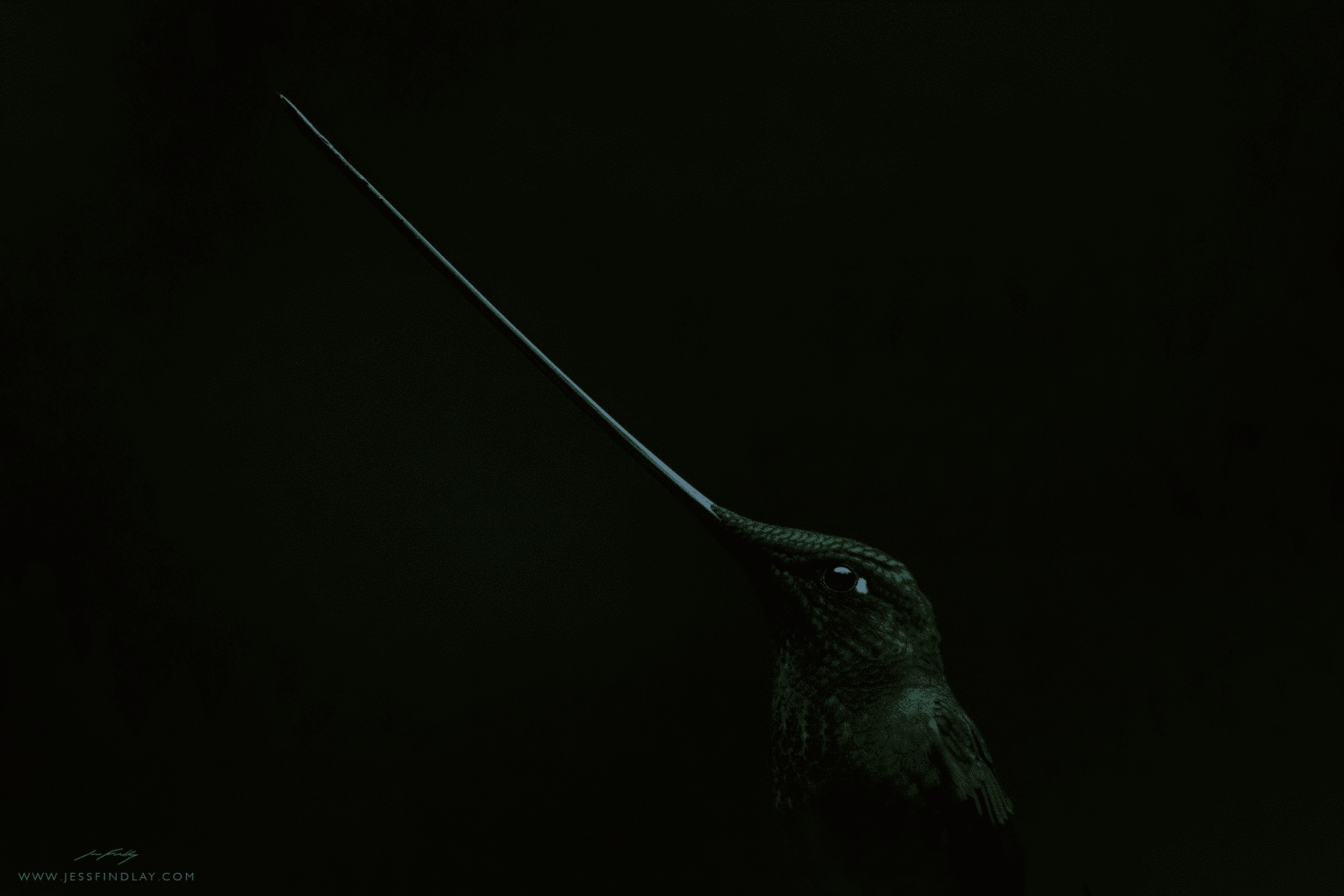
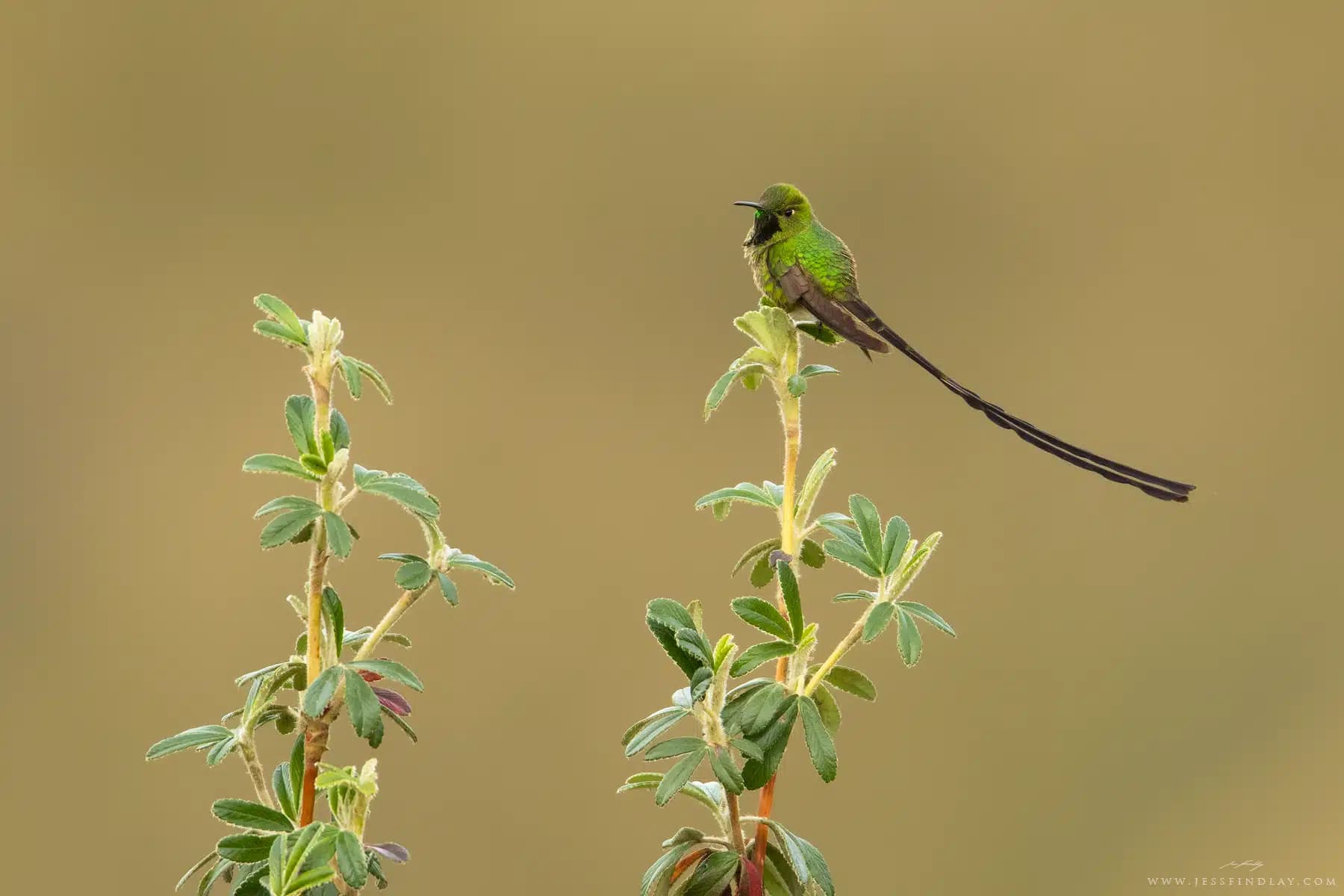
The forest between the river and the ruins hums. Chestnut-breasted Coronets and Collared Incas dominate the flowering shrubs; the endemic Green-and-white Hummingbird — another bird found only in this region of Peru — feeds quietly at mid-levels; and gardens with feeders around Aguas Calientes can produce a dozen hummingbird species in an hour. Golden-headed Quetzals call from the slopes, Andean Motmots sit sentinel in the shade, Andean Guans crash through the canopy, and the endemic Masked Fruiteater — green, secretive and much sought-after — moves with the mixed flocks. Those flocks are the pulse of the place: wait on a quiet stretch of trail and let waves of tanagers, flycatchers and furnariids wash past you.
Birding the citadel itself
- Go in on the earliest entry slot you can get — the terraces are quietest and the bamboo most active in the first two hours.
- Work the bamboo edges near the upper agricultural terraces and the Sun Gate trail for Inca Wren.
- Look up: White-collared Swifts scythe over the plaza, Mitred Parakeet flocks scream across the saddle, and Black-and-chestnut Eagle — one of the Andes' rarest raptors — occasionally rides the ridge.
- Rufous-collared Sparrows and Blue-and-white Swallows are everywhere; even the 'trash birds' at Machu Picchu are charming.
- Note the rules: full-size tripods and telescopes are restricted inside the sanctuary, so bring binoculars and a camera you can hand-hold.
When to go
There is no bad season. The drier months from roughly April to October bring more settled weather and easier trails; the wetter months bring lusher forest, more flowering and fewer crowds. Bird activity peaks in the first hours after dawn year-round, which is the real reason to sleep in Aguas Calientes rather than day-trip from Cusco: you can be birding the Mandor road at first light and inside the citadel before the trains arrive.
Pair it with Abra Málaga for a Cusco endemics double
Serious birders rarely visit Machu Picchu alone. The Abra Málaga pass, on the road between Ollantaytambo and the lowlands, climbs from cloud forest to Polylepis woodland and puna at 4,300 metres — a completely different suite of birds, including some of Peru's rarest endemics, one mountain over. Combining the two turns a standard tourist itinerary into one of the best two-to-three-day birding circuits in the Andes: cock-of-the-rock and Inca Wren one day, high-elevation specialists the next.
Seeing it with Wild Andes Tours
Our Machu Picchu Birding Tour runs from Cusco or the Sacred Valley and is built the way birders want it: overnight in Aguas Calientes, the Mandor valley and riverside at dawn, a guided visit inside the citadel that treats the Inca Wren as seriously as the Inca walls, and an optional Abra Málaga extension for the high-Andean endemics. We handle the permits, trains and timing. You handle the binoculars.
See these birds — and the citadel itself — on our four-day Machu Picchu birding tour, which pairs the Sacred Valley and Abra Málaga with the cloud forest of the sanctuary.
Want to see these birds in the field?
We run small-group birding and photography tours around Lima and across Peru, guided by the people who wrote this article.