August 2026
Andean Condor Conservation: A Refuge on Lima's Doorstep
Photo © Debbie DAJ Photos
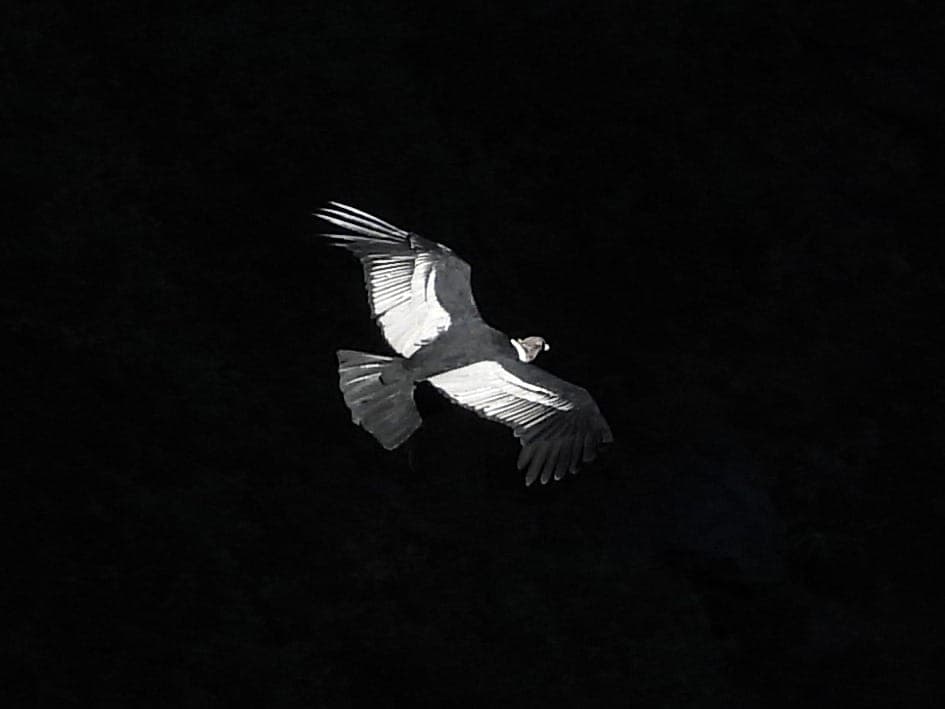
Andean Condors are Vulnerable and declining — 63% of deaths are poisoning. Why a canyon 90 minutes from Lima is a refuge, and what birdwatching can do about it.
There is a pair of Andean Condors nesting in the Santa Eulalia Canyon right now, ninety minutes from the edge of a city of ten million people. I want to explain why that sentence is less ordinary than it sounds, and what it has to do with whether anyone is still writing it in fifty years.
A bird built for a world with fewer people in it
The Andean Condor is one of the largest flying birds on Earth, and almost everything about its biology assumes a long, undisturbed life. A pair raises a single chick, and does so roughly every two to three years. The young bird does not fledge for six or seven months, stays with its parents for around two more, and does not breed itself until somewhere between six and eleven years old.
Run those numbers and the consequence is stark. A condor pair might raise a handful of young across an entire lifetime. That works beautifully when adults reliably survive for decades. It fails completely the moment adults start dying early — and there is no way to breed the shortfall back quickly, because the species has no capacity to accelerate.
This is the central fact of condor conservation, and everything below follows from it. You cannot lose adult condors and make it up later.
The decline, in numbers
In 2020 the IUCN moved the Andean Condor from Near Threatened to Vulnerable. The global population is now put at no more than about 6,700 mature individuals, against an estimate closer to 10,000 a decade earlier, and the trend is downward across the range.
The picture in Peru is tighter still. In 2022 SERFOR ran the country's first National Condor Census, counting simultaneously across sixteen departments, and recorded a minimum of 301 individuals. Other estimates put the national figure at no more than about 500. Whichever number is closer, this is not an abundant bird in the country most associated with it.
North of us the situation is worse: fewer than 340 condors are thought to remain across the whole of northern South America, and the species is functionally gone from Venezuela.
What is actually killing them
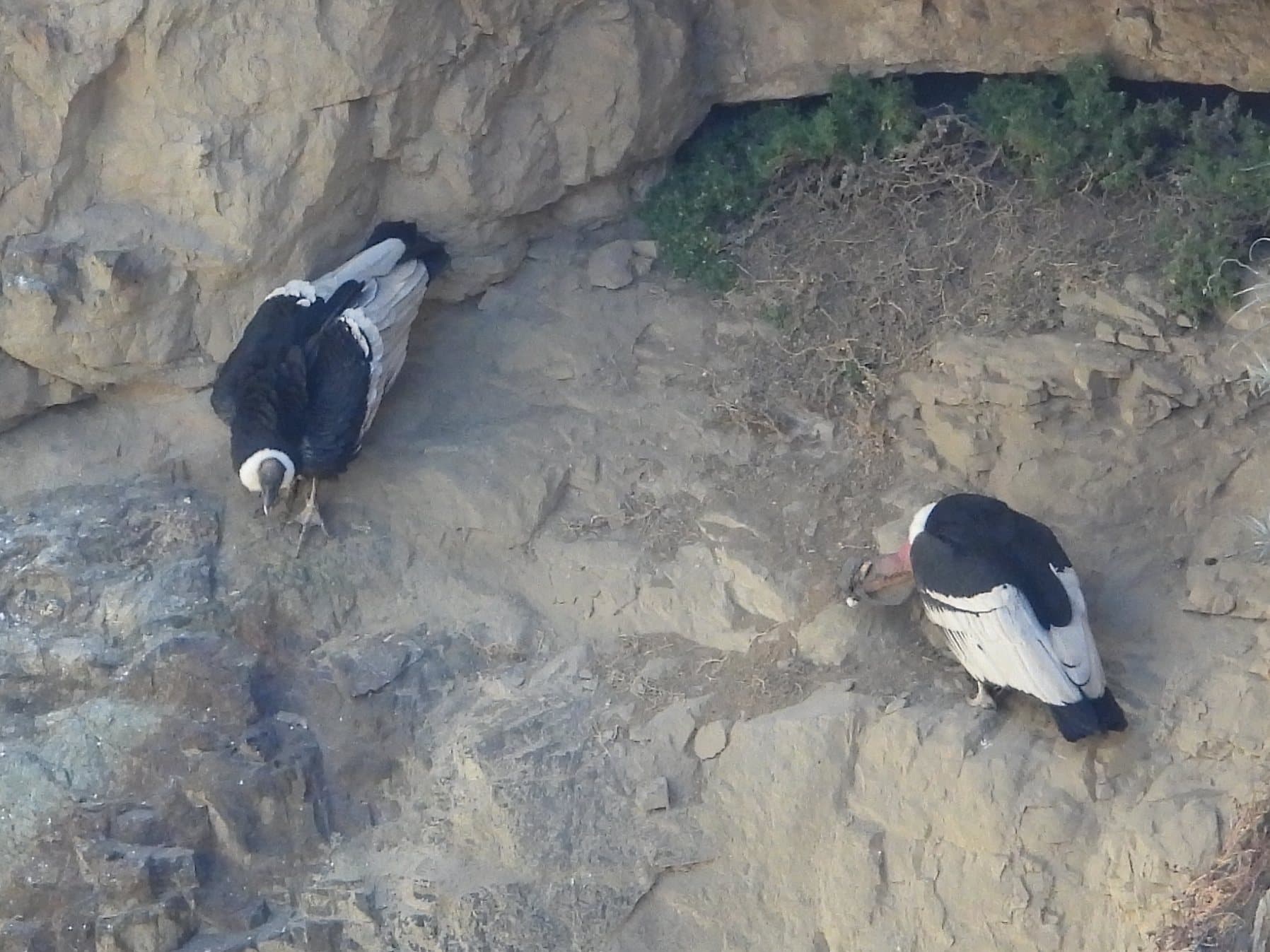
Photo © Debbie DAJ Photos
It is tempting to assume habitat loss. It is not, mostly. A study of 164 affected condors across northern South America between 1979 and 2021 found the causes are overwhelmingly direct and human:
- Poisoning — 63% of cases. Usually not aimed at condors at all. A carcass is laced to kill pumas or foxes, and the scavengers that find it first die instead. Because condors feed communally, one poisoned carcass can take out a dozen birds at once.
- Shooting — 13%. Persecution founded on the belief that condors take live lambs, which they do not; they are obligate scavengers.
- Lead. Fragments from ammunition in carcasses accumulate in the blood. In that same study, several birds tested above the sublethal threshold — enough to impair a bird without killing it outright.
- Collision and electrocution on high-tension lines, and illegal trafficking.
There is also a Peruvian pressure that has no equivalent elsewhere. In the Yawar Fiesta, wild condors are captured and tied to a bull for a festival. Estimates suggest around sixty birds are taken from the wild each year, and that between ten and twenty per cent do not survive the experience. CORBIDI and the Peregrine Fund are working with communities to end the practice — an approach built on negotiation rather than prohibition, which is the only kind that tends to hold.
Set that against a bird that raises one chick every two or three years, and the arithmetic writes itself.
Captivity works — and that is not the good news it sounds like
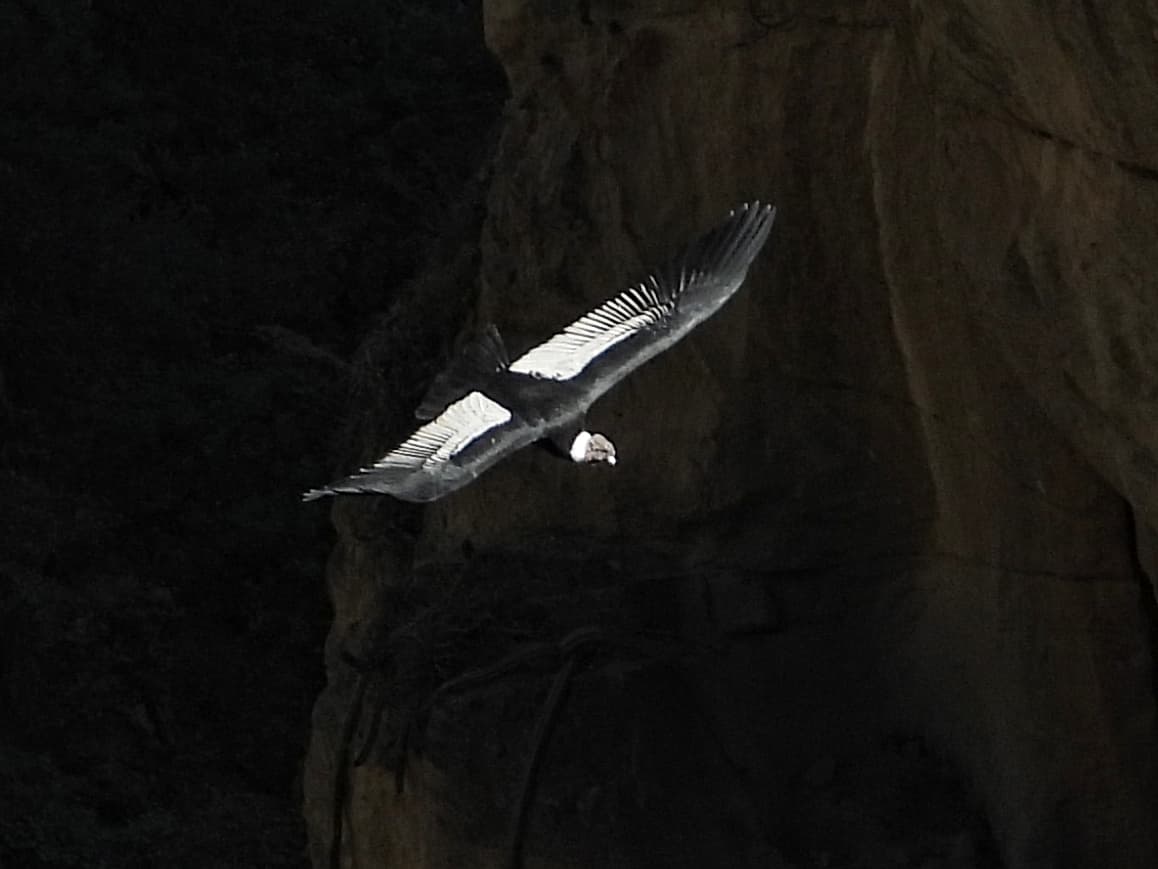
Photo © Debbie DAJ Photos
Condors breed well in captivity. Reintroduction programmes in Colombia and Argentina have released birds successfully since 1989, using a technique that matters more than it might appear: chicks are fed with hand puppets shaped like adult condors, so they never associate food or comfort with people. A condor that has imprinted on humans is a condor that will approach them, and approaching people is what gets condors killed.
So the captive side is largely solved. We know how to produce condors.
What we have not solved is the landscape they are released into. A released bird flies into exactly the same poisoned carcasses, the same power lines and the same guns. Captive breeding buys time and replaces losses; it does not address why the losses happen. The bottleneck was never the supply of condors. It is the survival of adults in the wild — and that is a problem solved on the ground, in the canyons, with the people who live there.
Why Santa Eulalia matters
Photo © Debbie DAJ Photos
Which brings me back to the canyon. Santa Eulalia rises from arid coastal foothills to high grassland in a short horizontal distance, generating exactly the thermals and updraughts a three-metre wingspan needs. There are cliffs for roosting and nesting, sparse human settlement on the steep ground, and enough carrion in the system to support the birds.
But the thing that makes it genuinely unusual is not the geology. It is the proximity. Most people are told that seeing a wild condor in Peru means Colca Canyon — ten hours from Arequipa over a 4,800-metre pass. Santa Eulalia is a morning's drive from Lima. A refuge for the largest flying bird in the Americas sits on the doorstep of one of South America's largest cities.
That proximity cuts both ways. It means the canyon is reachable, watchable, and — if anyone is paying attention — defensible. It also means it is within reach of everything a growing metropolis does to the land at its margins.
What birdwatching is actually worth here
I want to be careful here, because the claim that tourism saves wildlife is made far too loosely.
Birding does not protect condors by existing. It protects them when it changes the arithmetic for the people who share the canyon with them. A landowner deciding whether to poison a carcass is making an economic decision. If a living condor is worth more, repeatedly, than a dead predator is worth once, the decision changes — and it changes locally, permanently, without anyone needing to be persuaded of anything abstract.
That only works if the money reaches the canyon. Guides, drivers, meals, lodging, access fees, guarded viewpoints. Birding is unusually well suited to this: it is low-volume and high-value, the same birds can be watched indefinitely without being consumed, and birders will return to the same site for years.
It is not a complete answer. It will not stop lead in ammunition or fix a power line. But it is one of the few conservation arguments that pays its own way, and in a canyon this close to Lima it is available immediately.
The nesting pair
Which is why a nesting pair, this season, this close to the city, is worth more than a good photograph.
A pair choosing to breed here means the canyon is still supplying what a condor needs: cliffs quiet enough, food reliable enough, disturbance low enough. That is a verdict on the habitat delivered by the only party whose opinion counts. Every bird watched from the Autisha Bridge is also a bird recorded, and a record is what turns a canyon from scenery into a site with a case for protection.
If you would rather see it yourself, the Santa Eulalia Canyon day tour runs from Lima, and the practical guide to seeing condors there covers where to stand and when to go.
Six thousand seven hundred birds is not many for a continent. Three hundred is not many for a country. But a pair on a cliff ninety minutes from Lima is a start, and it is close enough that a lot of people could go and look.
Want to see these birds in the field?
We run small-group birding and photography tours around Lima and across Peru, guided by the people who wrote this article.