July 2026
The Undulated Antpitta: Now Reliable at the Ensifera Camp
Photo © Jess Findlay
One of the Andes' hardest birds to see, the Undulated Antpitta is now reliable at the Ensifera Camp in Cusco's Sacred Valley. Where, when and how to see it.
For most birders, the Undulated Antpitta is a voice in the fog — a haunting, far-carrying song that rolls out of the Andean cloud forest at dawn and almost never resolves into an actual bird. Big, round and impossibly shy, Grallaria squamigera has long been one of those species you hear on every trip and see on almost none. That has now changed in the Sacred Valley of Cusco, where a resident Undulated Antpitta has become one of the most reliable — and most photogenic — birds at the Ensifera Camp, a cloud-forest sanctuary we visit on our Sacred Valley Birding Tour.
Meet the Undulated Antpitta (Grallaria squamigera)
The Undulated Antpitta is one of the largest members of its family — a plump, almost tailless ball of a bird that stands tall on long legs and bounds across the forest floor in short, deliberate hops. Slaty blue-grey above and washed with warm ochre below, it takes its name from the fine dark scalloping, or 'undulations', that ripple across its breast. It is a bird of the high, humid temperate forest, ranging down the Andes from Venezuela to Bolivia between roughly 2,600 and 3,700 metres, where it haunts mossy undergrowth, bamboo tangles and the edges of ancient Polylepis woodland. Like all antpittas it feeds mainly on earthworms and other invertebrates prised from the damp leaf litter — a detail that, as we will see, is the key to seeing one.
Why antpittas are so hard to see
Antpittas are the great skulkers of the Neotropics. They forage alone on the ground in the darkest, densest tangles, they freeze at the first hint of movement, and their ventriloquial dawn songs seem to come from everywhere and nowhere at once. Generations of birders have logged the Undulated Antpitta as 'heard only'. The breakthrough came in Ecuador in the mid-2000s, when a farmer named Ángel Paz discovered that antpittas could be coaxed into the open with a daily offering of earthworms — a technique that has since transformed antpitta-watching across the Andes. Where a feeding is established and a wild bird is patiently habituated over many months, one of birding's most maddening families becomes one of its most rewarding.
Now reliably seen at the Ensifera Camp
That is exactly what has happened at the Ensifera Camp, the cloud-forest reserve above Yanahuara in Cusco's Sacred Valley. After months of quiet, patient work, the team at the camp has habituated a wild Undulated Antpitta to a mossy clearing at the forest edge, and it now appears almost daily — hopping into full view, often at point-blank range. A bird that most visiting birders never realistically expected to see has become a near-guaranteed highlight, making the Ensifera Camp one of the very few places in Peru where the Undulated Antpitta can be watched and photographed with genuine confidence.
Birding the Ensifera Camp on our Sacred Valley Birding Tour
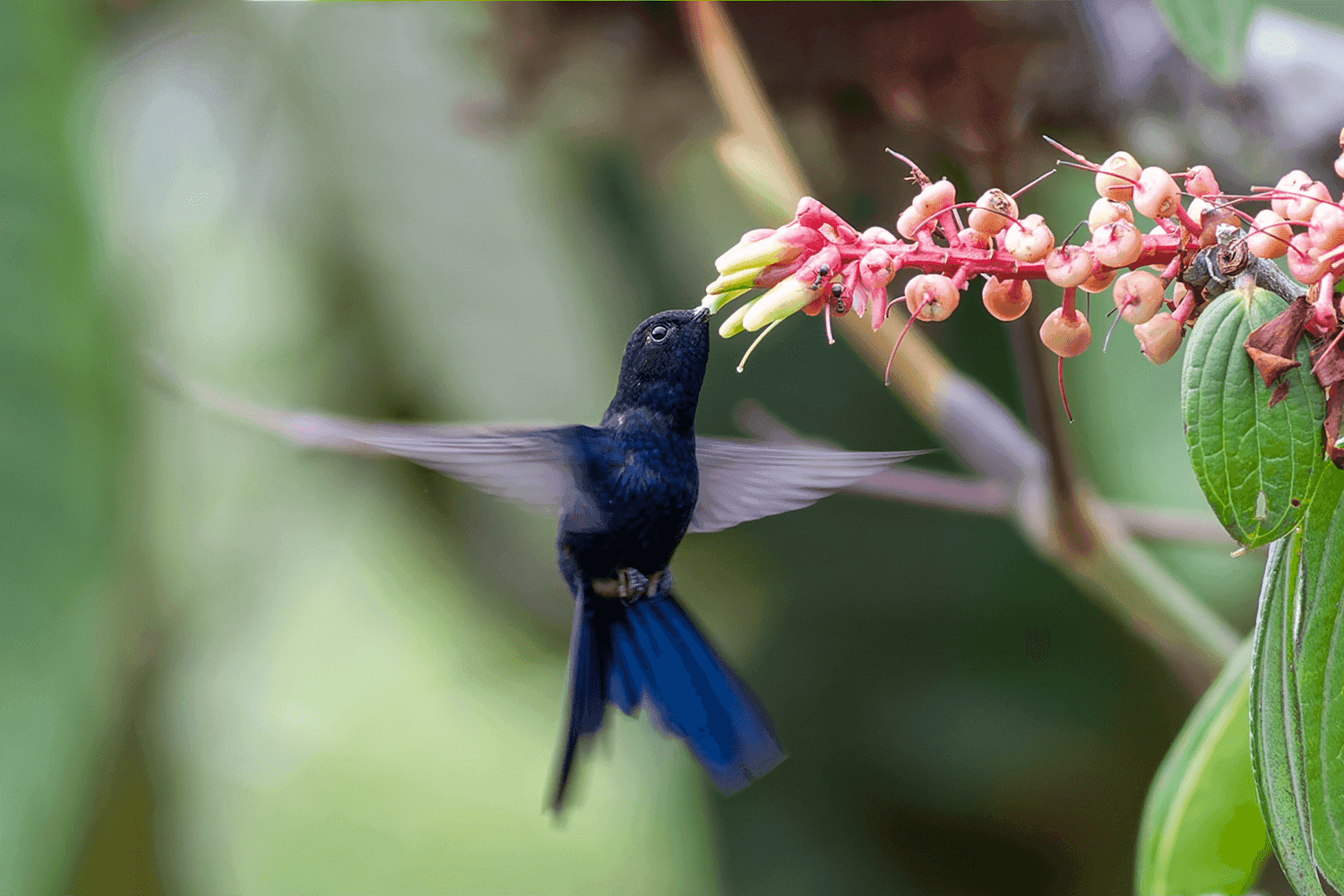
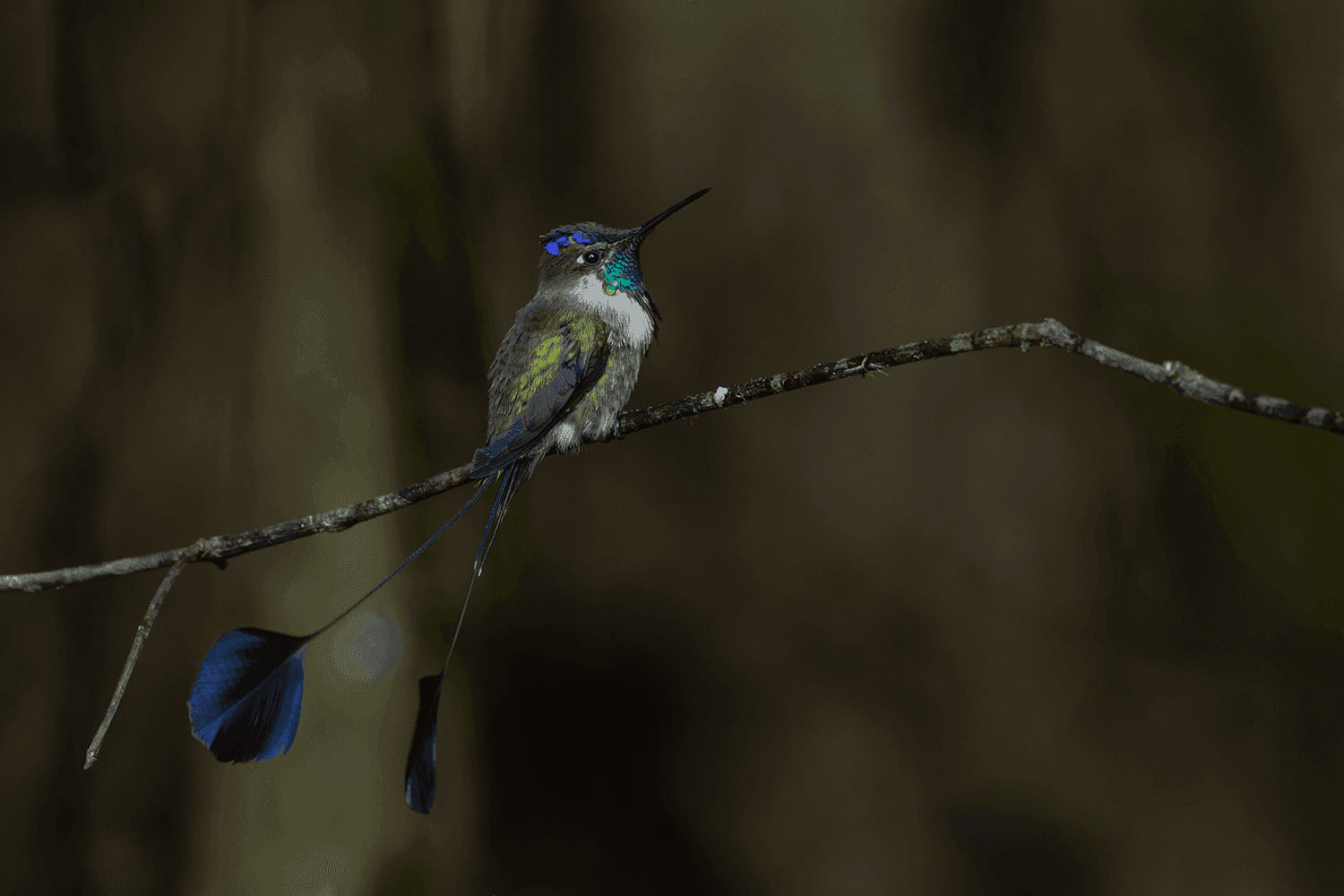
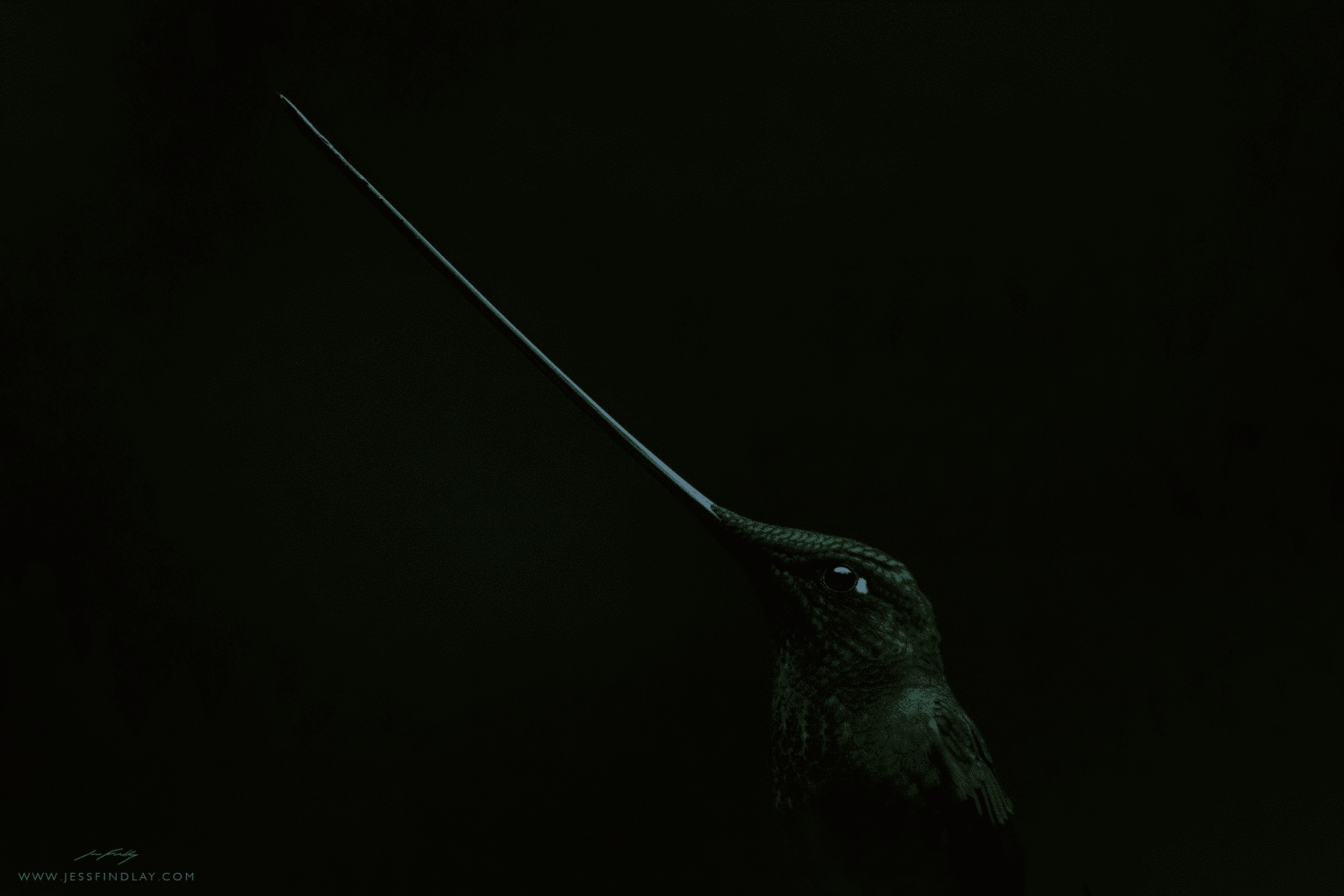
The Ensifera Camp sits in a pocket of humid cloud forest within the ACP Mantanay reserve, and it is far more than a one-bird stop. It is named for the extraordinary Sword-billed Hummingbird — Ensifera ensifera, the only bird on Earth with a bill longer than its body — which visits the feeders alongside a glittering cast of high-Andean hummingbirds. Among them are three Peruvian endemics — the Bearded Mountaineer, White-tufted Sunbeam and Green-and-white Hummingbird — with the endemic Chestnut-breasted Mountain Finch and the Undulated Antpitta working the forest edge. We bird the camp on our Sacred Valley Birding Tour, and again on the first day of our four-day Machu Picchu Birding Tour.
- Undulated Antpitta — now reliable at the feeding clearing
- Sword-billed Hummingbird, the camp's namesake
- Bearded Mountaineer, White-tufted Sunbeam and Green-and-white Hummingbird — three Peruvian endemics
- Chestnut-breasted Mountain Finch and mixed cloud-forest flocks at the forest edge
When and how to see it
The antpitta is most dependable in the early morning, when it comes to the clearing to feed, so we time our visit for soon after dawn — which also catches the hummingbird feeders at their busiest and the cloud forest before the mist rolls in. Sightings are good year-round, but the drier months from May to October make for the easiest access and the most comfortable birding. Come with patience, quiet feet and a camera ready: this is one Andean bogey bird that, at the Ensifera Camp, finally steps into the light.
Want to see these birds in the field?
We run small-group birding and photography tours around Lima and across Peru, guided by the people who wrote this article.