August 2026
Hummingbirds of Peru: The Complete Field Guide
Around 130 hummingbird species live in Peru, from the Marvelous Spatuletail to the Sword-billed Hummingbird. Where to see them, when to go, and which are endemic.
No family of birds says “the Andes” quite like the hummingbirds — and no country stages them quite like Peru. Around 130 species have been recorded here, among them the largest hummingbird on Earth, the only bird whose bill outmeasures its body, and what many consider the most spectacular hummingbird of all. More than a dozen of them live nowhere else on the planet.
This guide answers the questions we hear most from travellers planning a hummingbird-focused trip: how many species there are, which ones are worth building an itinerary around, exactly where to see them region by region, and when to come.
How many hummingbird species does Peru have?
Around 130 species — the exact count shifts a little with taxonomy, but Peru sits comfortably among the top three hummingbird countries on Earth, alongside Colombia and Ecuador. The reason is vertical: within a single morning’s drive the Andes climb from coastal desert at sea level to puna grassland above 4,500 metres, and almost every elevation band holds its own suite of hummingbirds. Sheartails and emeralds hum through the coastal gardens, comets and sunbeams work the dry mid-slopes, brilliants and coquettes swarm the cloud-forest verges, and metaltails and hillstars persist right up to the snowline.
Better still, hummingbirds are resident. Unlike migrant-chasing destinations, Peru’s hummingbird show runs all twelve months of the year — the most season-proof spectacle in Peruvian birding.
The ten hummingbirds everyone wants to see
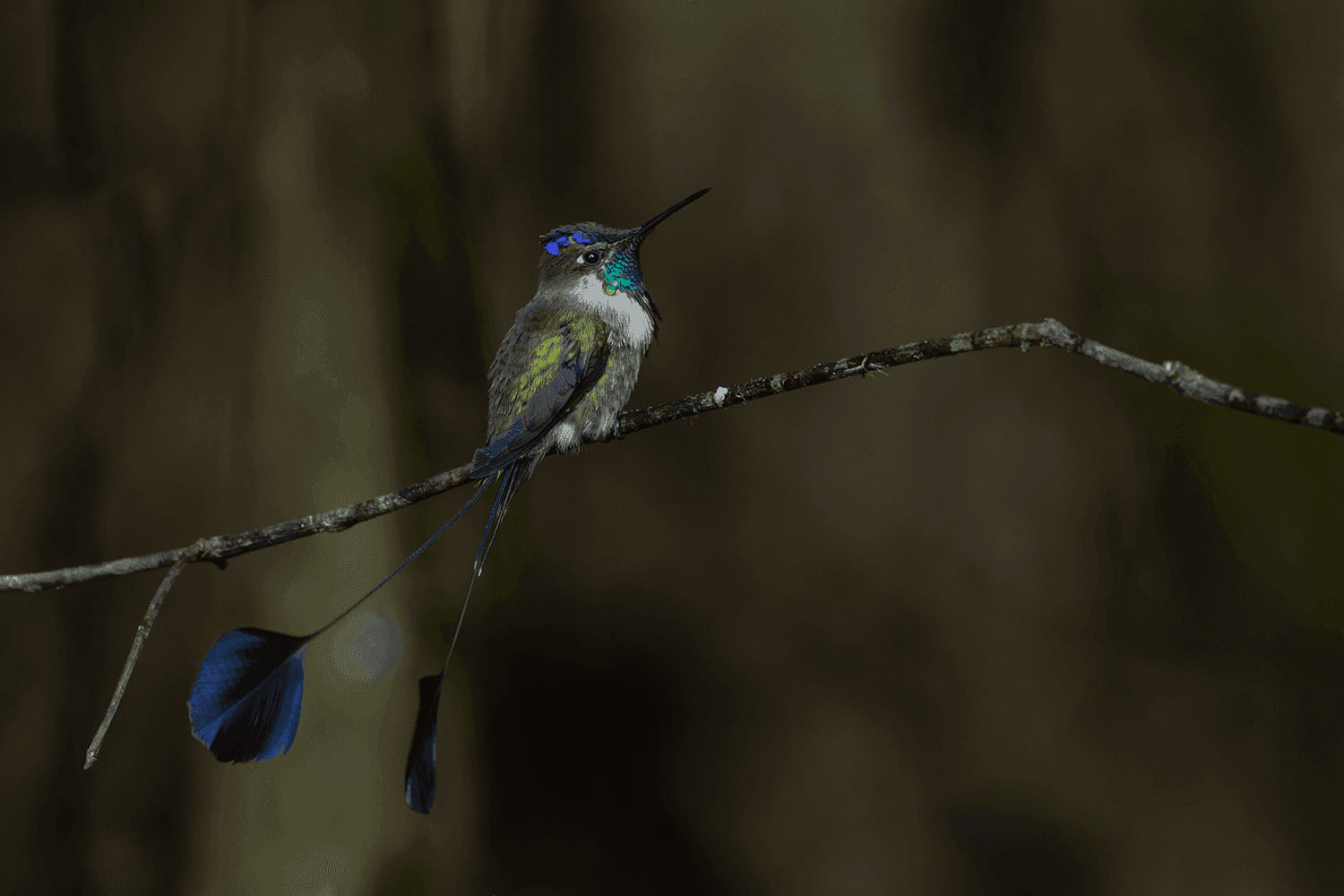
- Marvelous Spatuletail — the one on every book cover. Males carry two absurd racket-tipped tail wires and wave them in courtship dances. Endemic to a single valley system in Amazonas; the Huembo reserve on our Northern Peru circuit is the reliable place on Earth to see it — our full spatuletail guide covers the details.
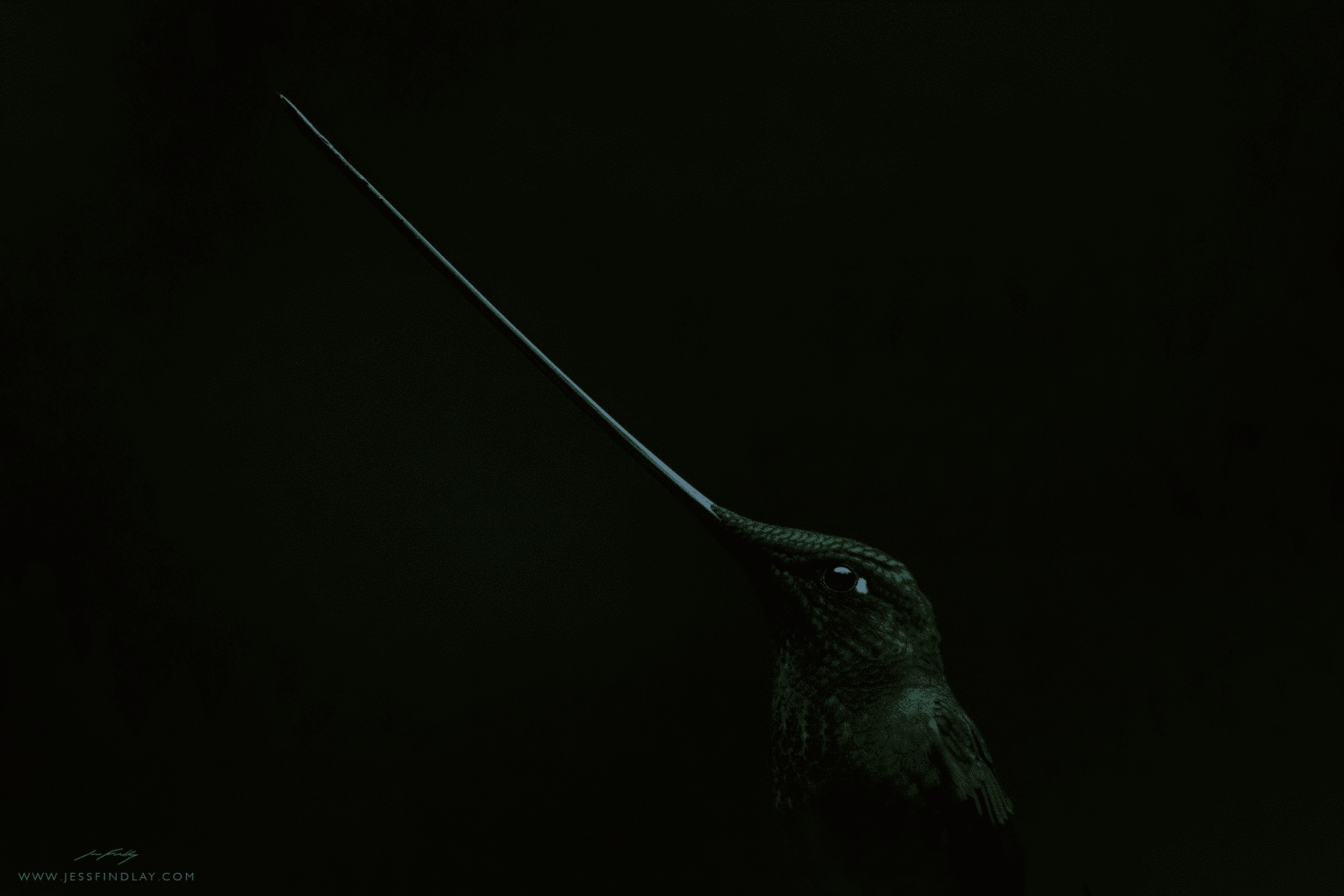
- Sword-billed Hummingbird — the only bird in the world whose bill is longer than its body, evolved for trumpet-flowered vines. It visits the Ensifera Camp feeders on our Sacred Valley Birding Tour almost daily.
- Giant Hummingbird — the largest hummingbird on Earth, nearly the size of a starling, with wingbeats slow enough to follow. Common in the arid inter-Andean valleys, including Santa Eulalia Canyon above Lima.
- Bearded Mountaineer — a huge Peruvian endemic wearing an iridescent violet-and-green beard, hopelessly devoted to tree-tobacco flowers. The classic site is Huacarpay Lake, 45 minutes from Cusco.
- Rainbow Starfrontlet — coppery fire with an emerald crown, gorging at Huembo’s feeders alongside the spatuletail. A northern cloud-forest specialty shared only with Ecuador.
- Royal Sunangel — a male so uniformly deep indigo it looks cut from velvet. Near-endemic, tied to stunted ridge-crest forest in the north; we look for it on the Northern Peru circuit’s Abra Patricia leg.
- Booted Racket-tail — a sprite with white puffball boots and its own racket tail, buzzing the cloud-forest edges of Manu National Park and the Machu Picchu valley.
- Bronze-tailed Comet — a slim, glittering Peruvian endemic of the dry western slopes; Santa Eulalia Canyon is its stronghold.
- White-tufted Sunbeam — an endemic sunbeam flashing white shoulder pom-poms, faithful to the Polylepis and shrub zones around Abra Málaga and Soraypampa.
- Peruvian Sheartail — a desert sprite whose males trail long forked streamers over flowering hedges near the coast. We regularly add it to any Lima day tour.
Where to see hummingbirds in Peru: region by region
Northern Peru — Huembo, Abra Patricia and the Utcubamba valley
The heavyweight. The Northern Peru endemics circuit strings together Huembo (Marvelous Spatuletail at point-blank range), the Abra Patricia cloud forests (Royal Sunangel, Emerald-bellied Puffleg, sicklebills) and dry Marañón valleys with their own endemics. If hummingbirds are the trip’s reason, this is the region that justifies the flight.
Cusco and the Sacred Valley
The best hummingbird region you can bird from a major tourist hub. The Ensifera Camp above the Sacred Valley brings Sword-billed Hummingbird, Green-and-white Hummingbird (endemic) and Shining Sunbeam to feeders; Huacarpay Lake adds Bearded Mountaineer and Giant Hummingbird in the tree-tobacco; and the Machu Picchu valley swaps in cloud-forest species like Chestnut-breasted Coronet, Collared Inca and Gould’s Jewelfront territory.
Abra Málaga and the high passes
Above 3,800 metres the cast turns hardy: Scaled and Tyrian Metaltails, White-tufted Sunbeam in the Polylepis, and Great Sapphirewing — nearly as big as the Giant — cruising the treeline on slow indigo wings. Our 2-day Abra Málaga tour gives the pass a full dawn on each side.
Manu and the eastern cloud forest
The Manu road descends through the richest hummingbird gradient in Peru — pufflegs and brilliants up top, Booted Racket-tail and Many-spotted Hummingbird mid-slope, hermits, coquettes and Amazonian species in the lowlands. A week on the Manu National Park tour can log 30+ hummingbird species without trying.
Lima and the desert coast
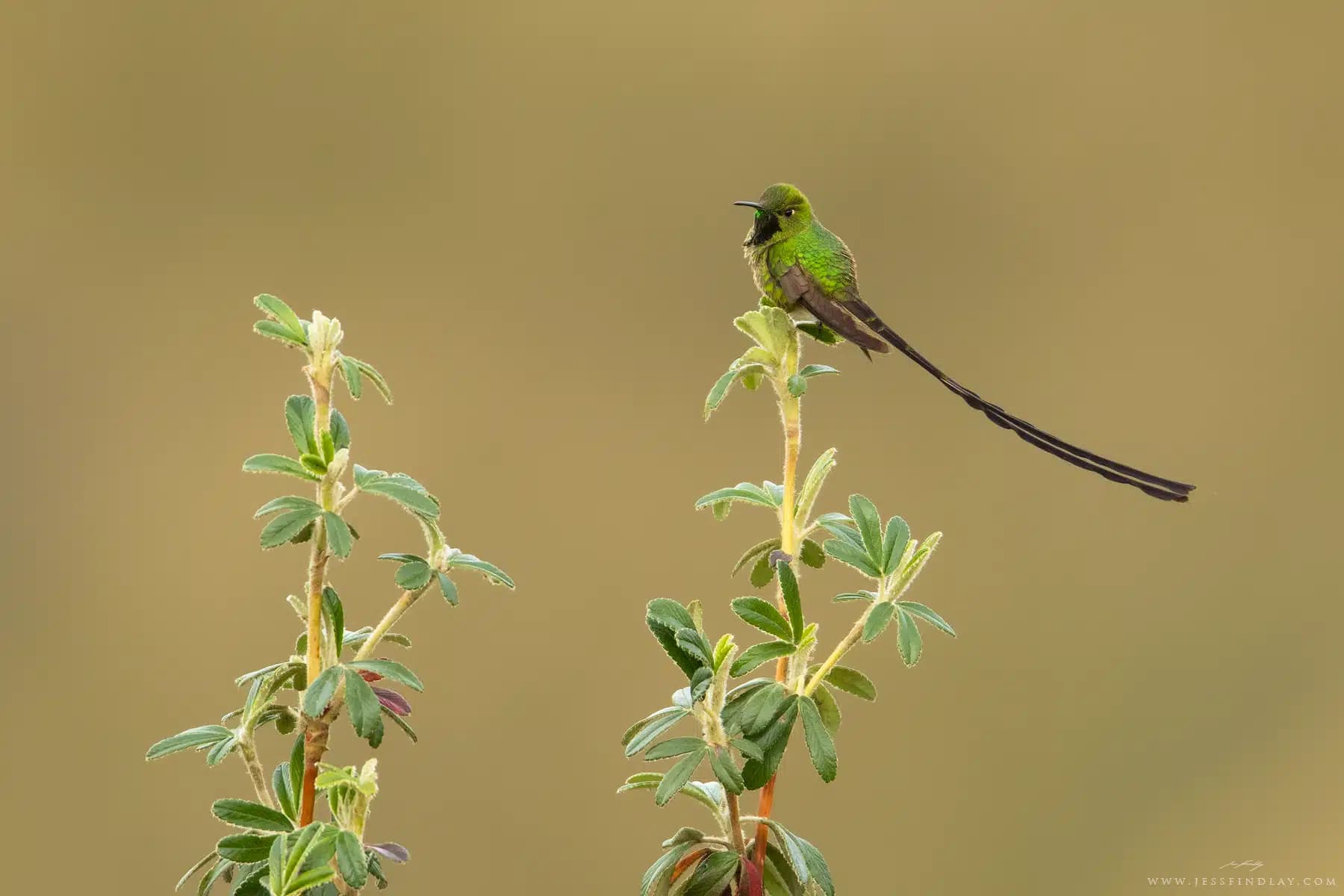
You do not even have to leave the capital: Amazilia Hummingbird and Sparkling Violetear work the flowering trees of Miraflores’ parks, Peruvian Sheartail and Oasis Hummingbird spar in the desert hedgerows, and a day up Santa Eulalia Canyon adds Giant Hummingbird, Bronze-tailed Comet and Black Metaltail — two of them endemics — before dinner back in the city.
When is the best time to see hummingbirds in Peru?
Any month. Hummingbirds are resident, and feeder stations like Huembo and the Ensifera Camp hold their stars year-round. The dry season (April–November) brings the most comfortable field conditions in the Andes, while flowering pulses after the rains (December–March) can concentrate spectacular numbers at natural nectar sources — tree-tobacco stands, flowering Eucalyptus and terraced gardens. If your dates are fixed, do not worry: of all Peru’s bird spectacles, this is the one least tied to a calendar.
Photographing hummingbirds in Peru
Feeder stations make Peru one of the world’s easiest places to photograph hummingbirds well — a few habits make the difference:
- Work the perches, not just the feeders — birds queue on nearby twigs, giving clean, natural frames every minute or two.
- Overcast light is your friend: iridescent gorgets burn out in harsh sun but glow evenly under thin cloud.
- Decide your wings: 1/2500s and above freezes them; 1/250s keeps a painterly blur. Both work — pick one on purpose.
Peru’s endemic hummingbirds
More than a dozen hummingbirds live only in Peru — the reason serious world listers keep coming back. The headline endemics:
- Marvelous Spatuletail — Amazonas; Huembo reserve
- Bearded Mountaineer — inter-Andean valleys of Cusco and Apurímac; Huacarpay
- Bronze-tailed Comet — dry western slopes; Santa Eulalia
- Grey-bellied Comet — dry Marañón-side valleys of the north
- Purple-backed Sunbeam — a tiny range in the upper Marañón
- White-tufted Sunbeam — Cusco’s high shrub and Polylepis zones
- Black Metaltail — arid slopes of the west, up Santa Eulalia
- Coppery Metaltail and Fire-throated Metaltail — central and southern high Andes
- Koepcke’s Hermit — foothill forests of central Peru
- Green-and-white Hummingbird — Ensifera Camp’s local endemic
- Spot-throated Hummingbird — dry northern valleys
Plan a hummingbird trip with us
Hummingbird success is hyper-local knowledge: which tree-tobacco stand is flowering this week, which feeder the Sword-billed is favouring, which ridge the sunangel sang on yesterday. That is what a local guide is for. Start with a Sacred Valley day or a Huacarpay morning from Cusco, or go all-in on the Northern Peru circuit — and if you tell us the species on your wish list, we will build the route around them.
Want to see these birds in the field?
We run small-group birding and photography tours around Lima and across Peru, guided by the people who wrote this article.