August 2026
The Marvelous Spatuletail: A Guide to Huembo
One of the world's most extraordinary hummingbirds, the Marvelous Spatuletail is a Peru endemic seen reliably at the Huembo reserve. Where, when and how to find it.
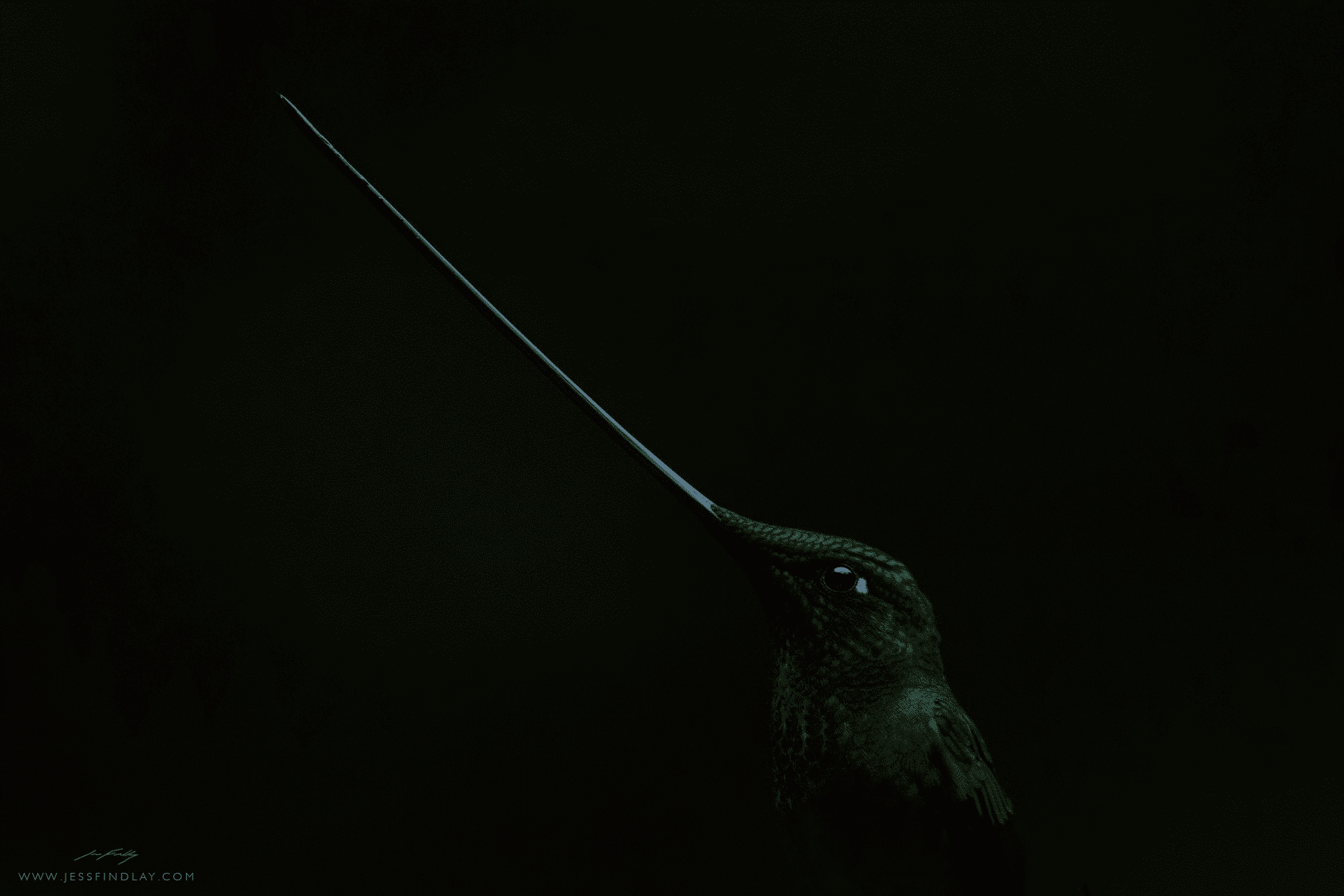
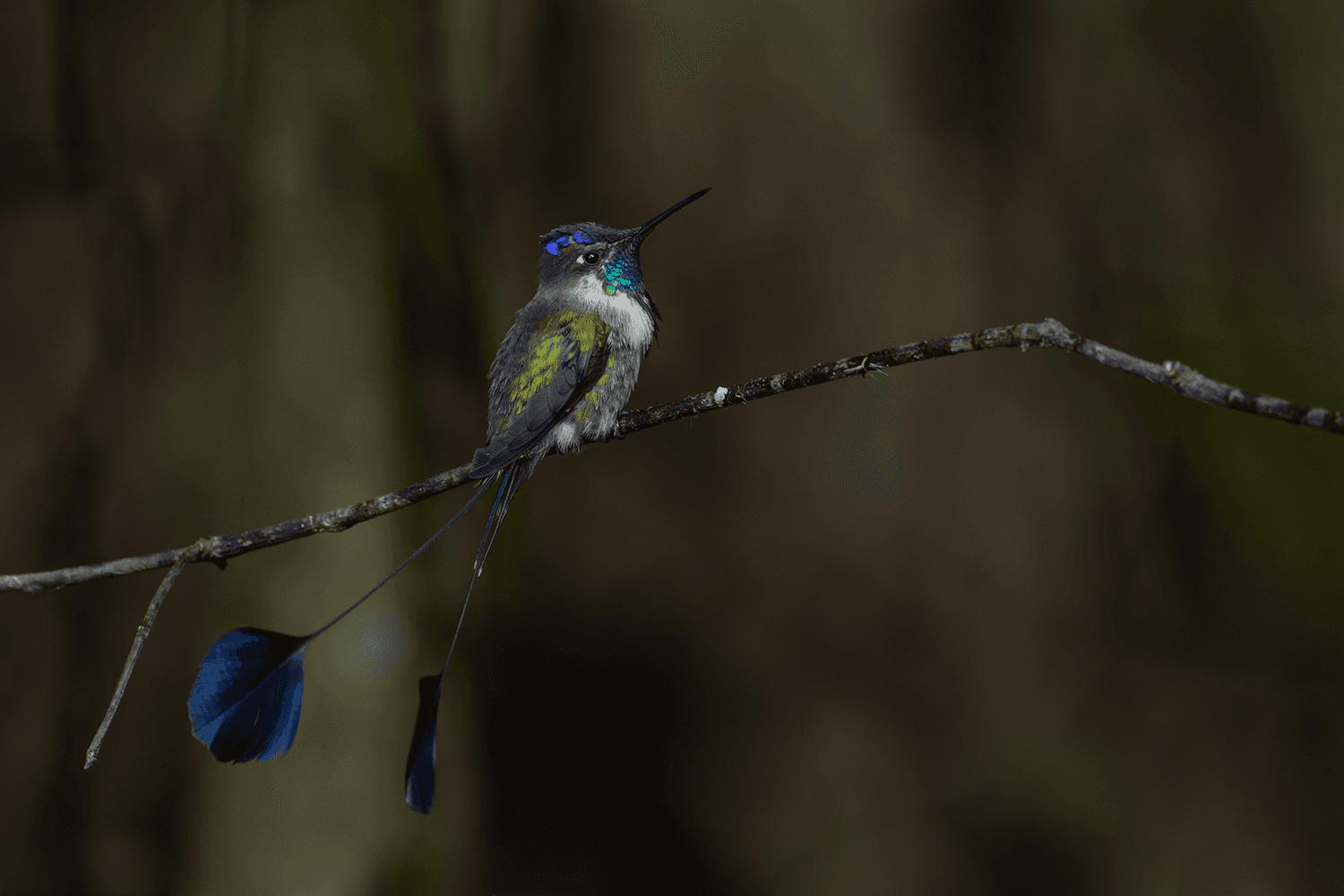
Of all the hummingbirds on Earth — and Peru has more of them than any other country — none is stranger or more sought-after than the Marvelous Spatuletail. The male carries just four tail feathers, two of them enormously elongated wires tipped with shimmering blue-violet paddles, or 'spatules', that he can swing independently through the air in a frantic courtship dance. Found only in a small pocket of cloud forest in northern Peru, it has become one of the birding world's great pilgrimages — and at the Huembo reserve it can now be seen with real reliability.
Meet the Marvelous Spatuletail (Loddigesia mirabilis)
The Marvelous Spatuletail is the only member of its genus, a Peruvian endemic confined almost entirely to the Río Utcubamba drainage in the department of Amazonas, on the east slope of the northern Andes between roughly 2,000 and 2,900 metres. The male is unmistakable: a turquoise gorget, a black line down a white breast, and those two racket-tipped tail wires far longer than his body. Displaying males hover before a female and whip the spatules back and forth in a blur — one of the most extraordinary courtship performances of any bird. First collected in 1835, it remains rare and localised, and is listed as Endangered, threatened by the clearing of its scrubby cloud-forest home.
Why it's one of the world's most wanted birds
Few birds combine rarity, beauty and sheer strangeness the way the Marvelous Spatuletail does. Its world range is tiny — a handful of valleys most travellers have never heard of — and for decades it was genuinely difficult to see, glimpsed only briefly as it zipped through dense hedgerows. That changed thanks to a conservation success story: local reserves planted the flowers it feeds on and set up sugar-water feeders, giving the bird a stronghold and giving birders a real chance to watch a displaying male. Today it sits near the top of almost every visiting birder's Peru wish list.
Where to see it: the Huembo reserve
The most reliable place in the world to see the Marvelous Spatuletail is the Huembo reserve, near Pomacochas in Amazonas — a conservation area created and run by the Peruvian NGO ECOAN specifically to protect the species. Its hummingbird feeders and flowering gardens draw the spatuletail in daily, along with the endemic Royal Sunangel and a supporting cast of tanagers, flowerpiercers and other hummingbirds; more than 400 species are on our free downloadable Huembo checklist. Mornings and late afternoons are best, and a little patience at the feeders is usually all it takes.
Birding Huembo on our Northern Peru tour
Huembo is one of the great set-pieces of our Northern Peru birding tour, which strings together the finest endemic birding in the country — the Long-whiskered Owlet and Royal Sunangel in the cloud forest of Abra Patricia, the antpitta feeding stations of Alto Nieva, and the hummingbird gardens of Waqanki near Moyobamba. On the northern circuit the Marvelous Spatuletail is rarely the only jaw-dropping bird of the day, but it is almost always the one people remember.
- The Marvelous Spatuletail at the Huembo feeders
- Royal Sunangel and the Long-whiskered Owlet at Abra Patricia
- Ochre-fronted and Rusty-tinged Antpittas at their feeding stations
- Rufous-crested Coquette and dozens of hummingbirds at Waqanki
When to go
The dry season from May to November is the most comfortable time to visit and the period we run the tour, though the spatuletail is resident year-round. Come with a little patience and a camera ready: watching a male Marvelous Spatuletail dance his spatules in the morning light is one of the great experiences in world birding.
Want to see these birds in the field?
We run small-group birding and photography tours around Lima and across Peru, guided by the people who wrote this article.